 |
 |
  |
A Call to Boycott Wyoming
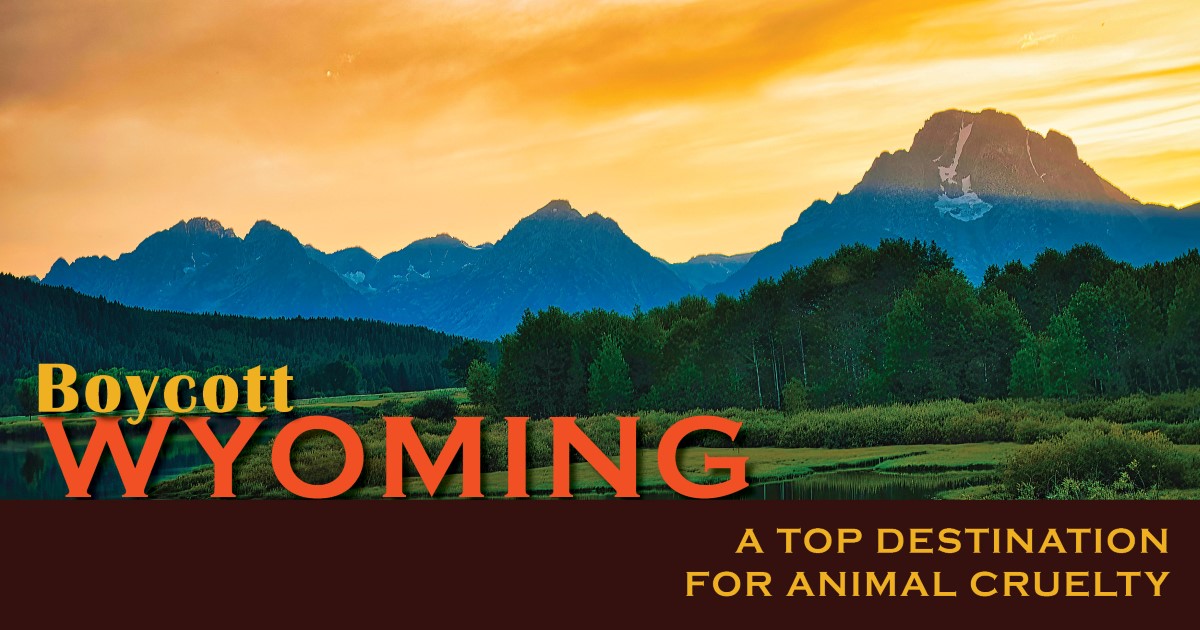
April 2024 - Wyoming grabbed international headlines this month, thanks to a resident who ran down a wolf with his snowmobile and tortured her for hours before killing her. The only punishment the state administered was a fine of $250. We want Wyoming to do the right thing--severely punish him for animal cruelty and utterly reform their wildlife policies. Learn more | Read press release | Take action
Lawsuit Filed to Restore ESA Protections for Wolves in Idaho, Montana and Wyoming
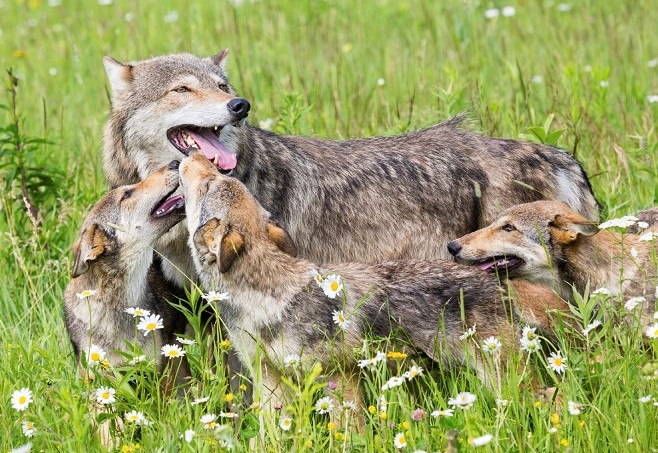
April 8, 2024 - We're one of 10 conservation groups who filed suit today against the U.S. Fish and Wildlife Service (USFWS), due to their failure to protect (relist) wolves in the Northern Rocky Mountains under the Endangered Species Act. The USFWS based their decision not to relist wolves in Idaho, Montana and Wyoming on a deeply flawed population model. Their decision also runs contrary to the best available science and ignores obvious threats to the species.
Idaho, Montana and Wyoming have clearly demonstrated they are incapable of managing wolves, only of killing them. These states are driving wolves to functional extinction in the Northern Rockies, cruelly destroying wolf families via bounties, wanton shooting, trapping, snaring, even running over them with snowmobiles and live-torturing them.
These states have become the poster children for what happens when politics trumps science. Science shows us the importance of intact pack structures, the vital role each family member plays, as well as the essential role wolves play in healthy ecosystems.
- Conservation groups challenge federal decision to deny western wolves protections - Apr. 8, 2024 press release
- Conservation groups initiate legal action against feds for failing to protect wolves - Feb. 7, 2024 press release
- Groups to sue feds over decision not to list wolves - Missoula Current, Feb. 7, 2024
Let's Ban "Cyanide Bombs" on America's Forest Service Lands, Too!
March 2024 - Right after our November 2023 win that banned M-44 cyanide bombs on BLM lands, we asked Congressman Jared Huffman (D-Calif) if he wanted to continue the push by urging the U.S. Forest Service (USFS) to also end M-44 use. After all, if wildlife, people and dogs can now enjoy all 245,000,000 acres of BLM lands without risking poisoning and death, why can't they also be safe on the 193,000,000 acres of USFS public forests and grasslands. Rep. Huffman said he did, so we all got to work. As a result, we're thrilled to announce that, on March 12, 2024, Rep. Huffman, along with Congressman Steve Cohen (D-Tenn) and Senator Jeff Merkley (D-Oreg), sent a letter to USDA Secretary Tom Vilsack and USFS Chief Randy Moore, urging this ban. It was signed by 13 additional members of Congress.
- Press release by Rep. Huffman, Rep. Cohen and Sen. Merkley
- Letter to USDA Secretary Tom Vilack and USFS Chief Randy Moore
- Former top government trapper speaks out against M-44 use, explains why trappers don't want to use them, advocates for USFS ban
- Learn more about M-44 cyanide bombs and their victims
- Support our work to ban all M-44s
VICTORY! "Cyanide Bombs" Banned on 245 Million Acres of Public Lands!
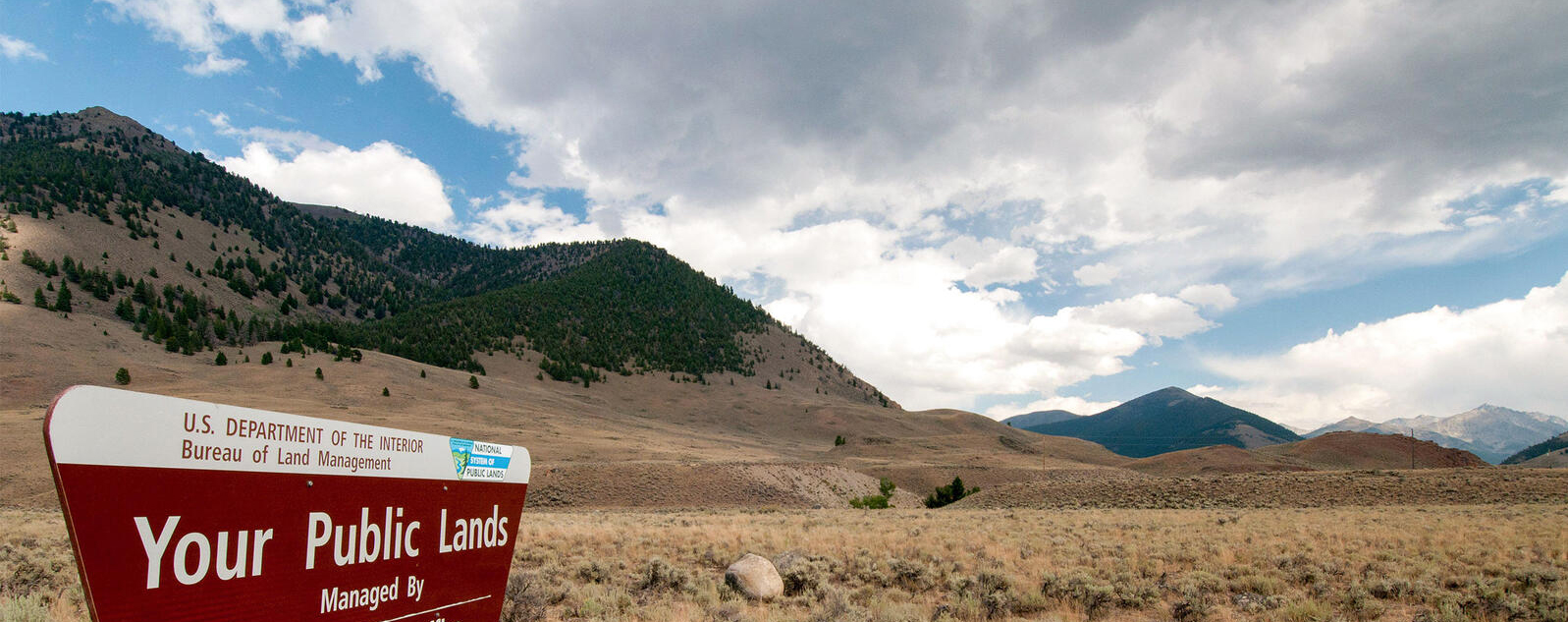
February 2024 - We continue to move forward, building on our thrilling November 2023 win in which the U.S. Interior Department banned the use of M-44 devices, commonly known as "cyanide bombs," on lands administered by the Bureau of Land Managment (BLM). This ban includes over 245 million acres, roughly a tenth of the nation's land mass. It means countless thousands of wild animals will not be killed on BLM lands, including endangered species. It also means people can feel free to walk their dogs on these public lands and not risk death or poisoning. This win is historic. It can and should lead to bans on all public lands, and ultimately a ban on all M-44 devices. Our work continues to this end.
- US agency ends use of ‘cyanide bomb’ to kill coyotes and other predators, citing safety concerns - Associated Press, Nov. 28, 2023
- Learn how this happened in our press release
- Learn more about M-44 cyanide bombs and their victims
- Former top government trapper thanks us for ban, speaks out against M-44 use, and details why trappers don't want to use them
- Support our work to ban all M-44s
Bills Introduced in Congress to Ban Deadly "Cyanide Bombs" on Public Lands; 70+ Groups Join Our Petition to Interior Dept.
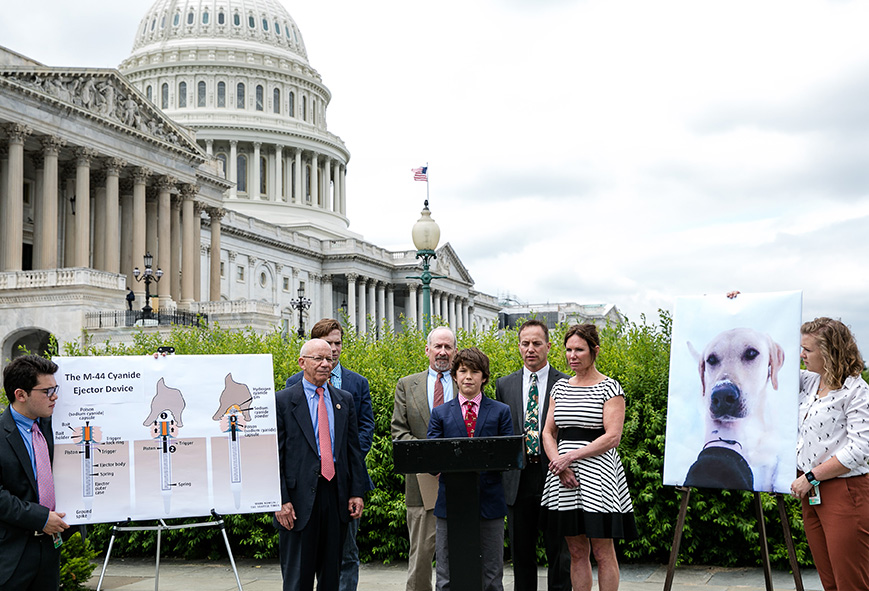
Fall 2023 - We continue to work diligently on two key campaigns to ban M-44 "cyanide bombs." One is our petition urging the Interior Department to ban M-44s on all BLM lands. We submitted it on June 29, 2023 and were thrilled to have over 70 conservation groups join us. Press release | Official petition
The other campaign is two federal bills to ban M-44s on all public lands across the country. These were introduced in the U.S. Congress on June 13, 2023. Nicknamed "Canyon's Law" in honor of Canyon Mansfield, the bills are common-sense, tax-saving, nonpartisan legislation that should be supported without resistance as an essential public safety measure by all elected officials. The House bill was introduced by Representatives Jared Huffman (D-Calif) and Steve Cohen (D-Tenn), and the Senate bill by Senator Jeff Merkley (D-Oreg). Press release | Legislative details
Thanks for Standing Strong for Democracy and Native Predators!
December 2022 - The Midterm elections brought our gravest concerns yet that an anti-science, anti-environmental-regulation minority would finish off our longstanding hopes for ending America’s war on wildlife. So we encouraged our supporters to pull out all the stops to protect democracy and get out the vote. We were counting on our perception that the majority of Americans believe in democracy, and that a substantive number value the science that proves wolves, cougars and other native predators should exist without persecution. Thankfully, enough people voted in the midterms to negate the worst effects of voter suppression and election subversion. So democracy and hope appear to hold, for now. We sincerely thank you. Having fewer far-right extremists in power gives us a much greater chance of success in our work. Read 2022 highlights in our special year-end newsletter
Celebrating Idaho win that extends key predator protections and M-44 "cyanide bomb" ban thru 2024
July 2022 - In this era of endlessly awful headlines, we're pleased to report that the barbaric body within the USDA misnamed "Wildlife Services" is being forced to follow the best available science in many protected areas in Idaho for several more years, and possibly longer! Thanks to a settlement agreement reached last week with conservation groups, restrictions on killing of native predators on protected public lands have been extended to the end of 2024, when Wildlife Services must complete a new Environmental Impact Statement (EIS). READ MORE
- IDAHO: Need for Better Science Halts USDA Carnivore Killing - Environment News Service, July 1, 2022
- US agency to limit predator killing methods in Idaho - Idaho Statesman, June 30, 2022
Wolf Protections Restored in Parts of West, But Not in Northern Rockies, Where Functional Extinction Is Well Underway
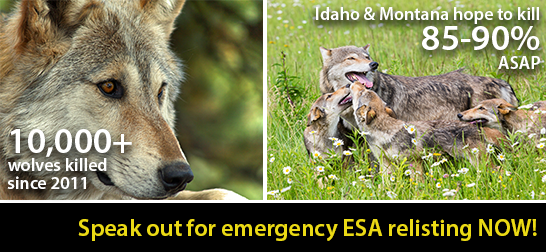
Wolves were rescued from the brink of extinction in the 1970s, but remain unrecovered according to top scientists. Ignoring that fact, the federal government began stripping their protections under the Endangered Species Act (ESA) in 2011 and transferring management to the states. Between 2011-2019 over 8,000 wolves were killed by hunters and trappers alone in just seven states. In 2020 all federal protections were removed, which led to a multi-state killing frenzy kicking into even higher gear in the Northern Rockies and across the West. We conseratively estimate an additional 2,000 wolves have since been killed. Equally horrifying, at least 25 Yellowstone wolves have already been killed by hunters and trappers in Montana, Idaho and Wyoming, who are luring them over the invisible Park boundaries. More History | Recent Developments
Partially Great News! On Feb. 10, 2022 a federal judge restored protections for wolves in parts of the West, but not in the Northern Rockies, which, for wolf populations, include Idaho, Montana, Wyoming, eastern Oregon, and eastern Washington. Highly esteemed scientists say the real kill counts in Idaho and Montana are are grossly underreported. They estimate that illegal, unreported kills may roughly double the totals the states are officially reporting.
We have spoken out for wolves from the very start, and are currently working with scientists, activists and members of Congress, urging immediate reinstatement of federal protections for the gray wolves via emergency ESA relisting. Progress has been made. On Sept. 15, 2021, the U.S Fish & Wildlife Service announced they'd reviewed our collective petitions, found them substantive and credible, and would perform a comprehensive review on restoring protections in the Northern Rockies, but their review will take 12 months and wolves need help NOW! At an absolute minimum, a generous no-wolf-hunting zone should be immediately established around Yellowstone National Park. Please take a stand with us.
Honoring John Laundré, Ph.D., 1949-2021: A Brave, Brilliant & Irreplaceable Scientist
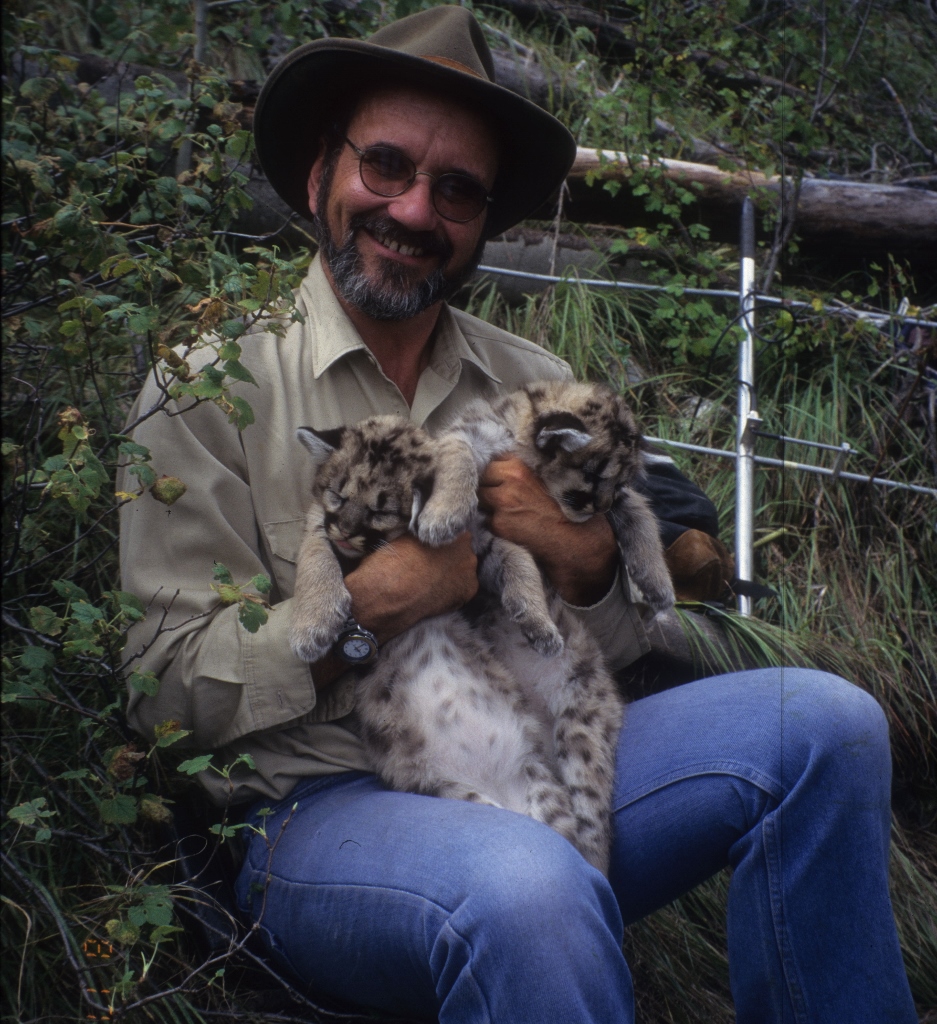
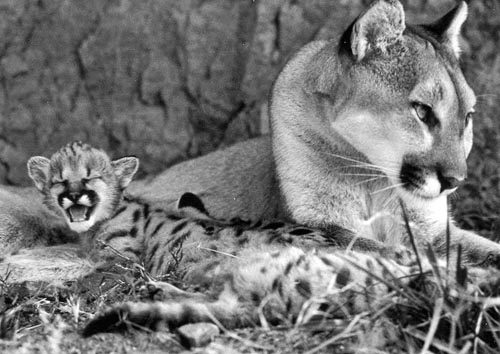
March 2021 - We are grieving the death of our dear friend, John Laundré, Ph.D., pictured above in the early 1990s with two baby cougars. A brave and gifted scientist, Laundré passed away March 5. Laundré made groundbreaking contributions to predator ecology, including the landmark concept of "The Landscape of Fear," which addressed the ecological implications of being afraid and proposed that the prey’s fear of predators is important in maintaining ecosystem integrity. He was brilliant, fiercely independent, and cannot be replaced. Learn more about his work & read memorial tributes from scientists and activists.
A Win for Wolves in Washington State, But Much More Work Is Required
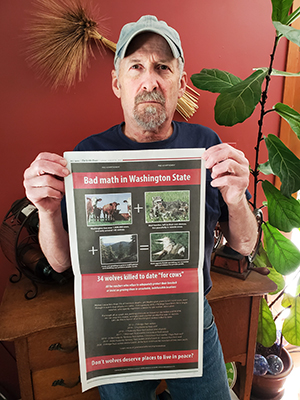
October 2020 - If you've followed our work for any period of time, you know we've long been outraged by Washington State's set up and sell out of wolves "for cows" and that we're not shy about speaking out. From August to September we did again, big time!
We took out a full-page ad in the Seattle Times, which you can see our executive director, Brooks Fahy, holding at left. The ad was part of a month-long print, web and social media campaign designed to jolt the public into awareness of how their tax money is being spent--on an unjust and counterproductive slaughter of our essential apex predators (whose favored diet, mind you, is not cows!).
The ad campaign and the resulting public outcry worked! Within a week Gov. Jay Inslee called for major wolf policy reform by WDFW Commissioners. A few weeks later the kill orders on members of the Leadpoint and Togo Packs were called off. But more work is required to fully succeed. WDFW Commissioners must develop and adopt new policies. So it is vital that the Governor appoints new commissioners who will represent the more than 95% of the public that does not hunt or ranch. They must also understand the vital role wolves play in our ecosystems.
Study Shows Hunting Cougars Increases Human Conflicts, Doesn't Protect Livestock
Wildlife agencies' claims about need to kill cougars to control populations and increase deer supply, also not supported by peer-reviewed science
Since the 1970s, when cougars (aka pumas or mountain lions) were declared a game species, state wildlife agencies in 10 western states have allowed tens of thousands to be killed by sport hunters. Kill numbers have increased over time, with currently over 3,200 cougars slaughtered each year. Wildlife managers have long argued that sport hunting is necessary to control cougars' numbers, reduce the risk of attacks on humans, protect livestock, and augment deer herds for hunters. But a new peer-reviewed study published in PLOS ONE that tested the effectiveness of this practice shows the opposite to be true. The lead author of this study, John Laundré, Ph.D., 1949-2021, was a member of our scientific advisory board and one of the top wildlife ecologists in the country.
- Evidence does not support hunting as a way to control cougars: Study - OPB.org, Feb. 24, 2020
- Study shows hunting cougars increases conflicts with humans, doesn't protect livestock - Predator Defense press release, Feb. 18, 2020
Celebrating New Year with Oregon M-44 Ban; Work toward National Ban Continues
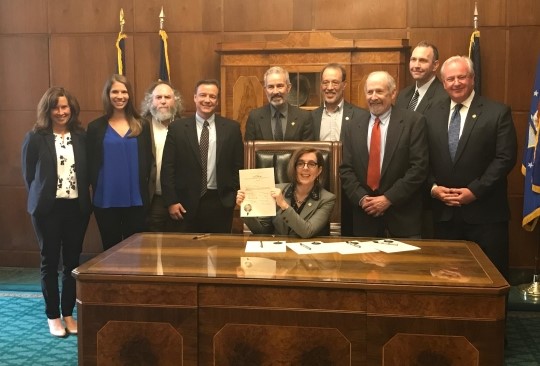
January 2020 - We are celebrating Oregon's statewide ban on M-44 'cyanide bombs,' which officially took effect on Jan. 1, 2020. The bill was signed into law on May 6, 2019 by Governor Kate Brown (pictured above at signing ceremony).
- 'Cyanide bombs' now banned in Oregon - KLCC.org, Jan. 1, 2020
Oregon's ban creates an entire West Coast free of these public safety menaces. They have also been banned on public lands in Colorado and on 10 million acres of public lands in Wyoming. And we are pleased to report Idaho's temporary statewide M-44 moratorium continues.
Meanwhile, the EPA has ignored the will of the people and reauthorized sodium cyanide use in M-44s, endangering the public good, pets and wildlife in the 13 states where these deadly and indiscriminate devices are still used. Over 99% of the public who commented before the EPA's decision agree with us that M-44s can never be used safely for predator control and must be banned nationwide. Our work continues at the federal, state and local levels. Learn more
After Wrongful Killing of Bobcat Kitten, Oregon DVMs Join Our Push for Reform
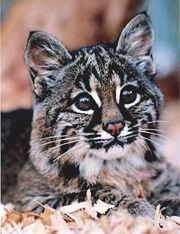
November 2019 Update - A bobcat kitten that mistakenly wandered into an office at the Oak Hill School in a wooded area on the edge of Eugene, Oregon, on Oct. 16 was unnecessarily and brutally killed by state authorities via "blunt force trauma to the head."
The bludgeoning of this young animal--who appeared healthy, was not behaving aggressively, and was either a hungry orphan or made the mistake of being a curious cat--was outrageous and inhumane.
We strongly condemned the actions of the officials involved asking for a full investigation and reform. We urged the governor via petition and legislators via testimony at a special hearing. Learn more
Resigning from Pacific Wolf Coalition; Applauding Gov. Inslee for Speaking Out
WASHINGTON WOLF WAR UPDATE, Oct. 1, 2019 - We've had it with being a member of a coalition that claims to protect wolves, but whose silence has made them complicit in Washington State's ongoing slaughter. And so, today we resigned from the Pacific Wolf Coalition. Read our resignation letter to coalition members. Meanwhile, we're thrilled to see our efforts with like-minded groups and individuals to get Governor Jay Inslee's attention have paid off. He's spoken out, asking WDFW Director Kelly Susewind to reduce "lethal removal" of wolves, expecially in prime wolf habitat. Read Inslee's letter. To learn more about how Washington's wolf slaughter started, watch our feather-ruffling film, The Profanity Peak Pack: Set Up and Sold Out.
Our Film Exposing Wolf Sellout Wins Second Audience Choice Award
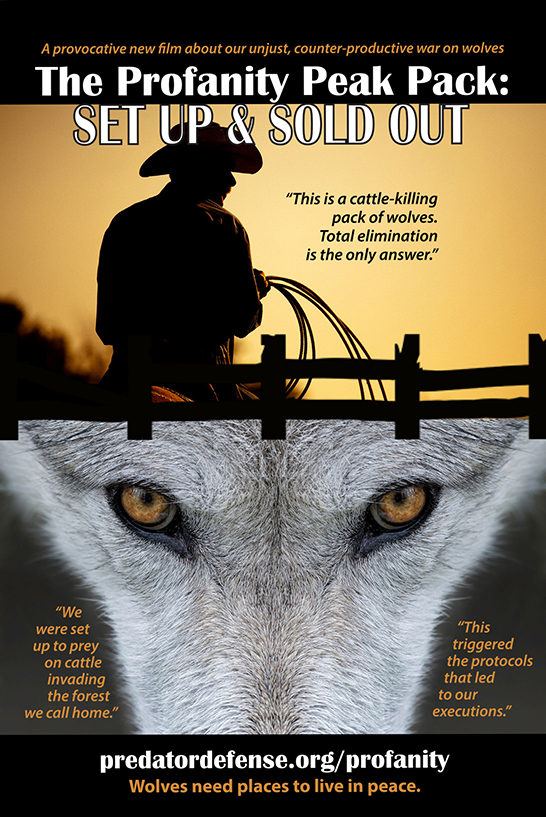
October 2018 - We're pleased to announce our newest film, "The Profanity Peak Pack: Set Up and Sold Out," won its second award--Audience Choice Award at the Eugene Environmental Film Festival. It previously won an Audience Choice Honorable Mention at the Animal Film Festival, which is featuring it on their new streaming platform, ECOSTREAMZ.
We took the Profanity Peak Pack film out on the road for a number of well-attended, big-screen showings, starting near the heart of wolf-killing country in Moscow, ID and Spokane, WA. Each screening featured a Q&A with fearless truthtellers in the wolf protection movement, including filmmaker Brooks Fahy and wolf researcher Robert Wielgus, Ph.D.
The film reveals the surprising players and policies that set up an unjust and unnecessary wolf slaughter on pristine, public forest land in Washington State. It happened regardless of science increasingly showing that killing wolves ultimately increases attacks on livestock. Learn more & watch the film
Judge Slams Idaho's Wildlife Slaughter in Precedent-Setting Ruling
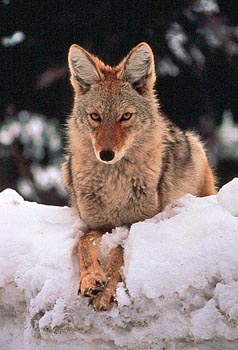
June 2018 - This incredibly good news simply must be shared! A federal court has ruled that Wildlife Services' barbaric wildlife-killing program in Idaho ignores science and fails to properly analyze how killing thousands of coyotes and other predators each year could impact the environment.
A judge ripped this federal agency’s justification for killing thousands of wild animals - Washington Post, June 25, 2018
We are plaintiffs in this precedent-setting case, which delivers a powerful rebuke to Wildlife Services. One of our favorite statements in the judge's decision is: “The lack of reliable data infects all the agency’s conclusions." He also found they ignored or dismissed essentially unanimous critical comments from conservationists and their own sister organizations.
We were represented in this extremely important case by Advocates for the West and Western Watersheds Project. It will now proceed to the remedy phase, where the judge will consider solutions to the problems identified in the ruling.
“Wildlife Services will now have to fairly evaluate how killing thousands of coyotes in southern Idaho each year affects the environment,” said Talasi Brooks, staff attorney at Advocates for the West. “The opinion is a win for wildlife, and a win for management based on modern science.”
- Learn more about USDA Wildlife Services
- Uncover the myth of wildlife "management"
- Watch our our award-winning film, EXPOSED: USDA's Secret War on Wildlife
- Help us end the war. Donate today.
Help Us Stop America's Wolf Slaughter
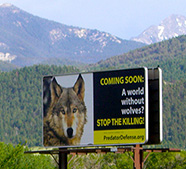
Since April 2011, when wolves lost federal endangered species protection, over 8,000 wolves have been slaughtered in just seven states. This is truly tragic, and we have taken the government to task for their flawed and biased plan to further remove protections for the gray wolf across the nation.
We are not alone in our thinking. In 2014 an independent peer review panel rejected the U.S. Fish & Wildlife Service's delisting proposal, saying it is not supported by the best available science and would be premature.
Bobcat Rescued from Illegal Snare
Meet the bobcat
we
named
Freedom and the
man who released him from the strangling
snare,
Brooks Fahy, our
executive director.
In the course of our work we often receive calls about animals caught in traps. In 2012 we received a call about a bobcat caught in an illegally set strangling snare on private property. We immediately rushed to the location and found an adult male bobcat caught around the torso. He had been trapped for about 12 hours.
Fortunately we got there in time to save his life by restraining him and cutting him free. We were rewarded by his immediate race for freedom, and—amazingly—we caught all this on video. Our footage will be an important tool in bringing about essential trapping reform and we will be sharing it broadly.
- Read full story of bobcat's dramatic rescue
- Watch rescue video Part 1 | Part 2
- Learn how you can help us bring about nationwide trapping reform
Maggie's Death: A Crime

Read Maggie's story and watch our
video interview with Maggie's
family,
the McCurtains. You'll see the
lovely
suburban neighborhood
where
this
deadly trap was
illegally
placed by
Wildlife Services. If
this could happen
here,
it could happen
anywhere.
Family's border collie strangled to death in trap near yard
In a pristine suburb of Portland, OR, a family's border collie named Maggie was killed by a deadly trap set in a community common area just 45 feet from their back yard. This is an area where kids play. This trap could have easily injured or killed a child.
No compliant warning signs were posted, nor were instructions for removing the trap or whom to call for help. The trap's placement violated both Oregon state law and the internal directives of Wildlife Services, the government agency responsible. This crime was committed with the help of your tax dollars.

The USDA's War on Wildlife
Your Tax Dollars at Work
The USDA Wildlife Services predator control program is the only federal program that kills native predators at the request of ranchers and state wildlife management agencies. They use indiscriminate methods that also endanger humans and pets. This program is a primary focus of our legislative work. About USDA Wildlife Services
Wildlife Patient Stories
From 1990-1995, Predator Defense operated a wildlife hospital and care center for injured and orphaned predator mammals.
Many native predators, like the baby bobcat orphan at left, were successfully released back into the wild.

Should Our Great Outdoors Be Laced with Land Mines?
View slide show on M-44 use, victims & progress | More
Quick Links
- Ban M-44s | Ban 1080
- USDA's war on wildlife
- The importance of predators
- The "killing agencies" & the myth of wildlife management
- Bears at risk
- Cougars at risk
- Coyotes under seige
- Wolves at risk
- How you can help
Film Features M-44 Victims We Helped

Watch LETHAL CONTROL, a poignant new film, featuring victims of M-44 "cyanide bombs" we've helped over the years.
Watch the Film Jane Goodall Wants Millions to See
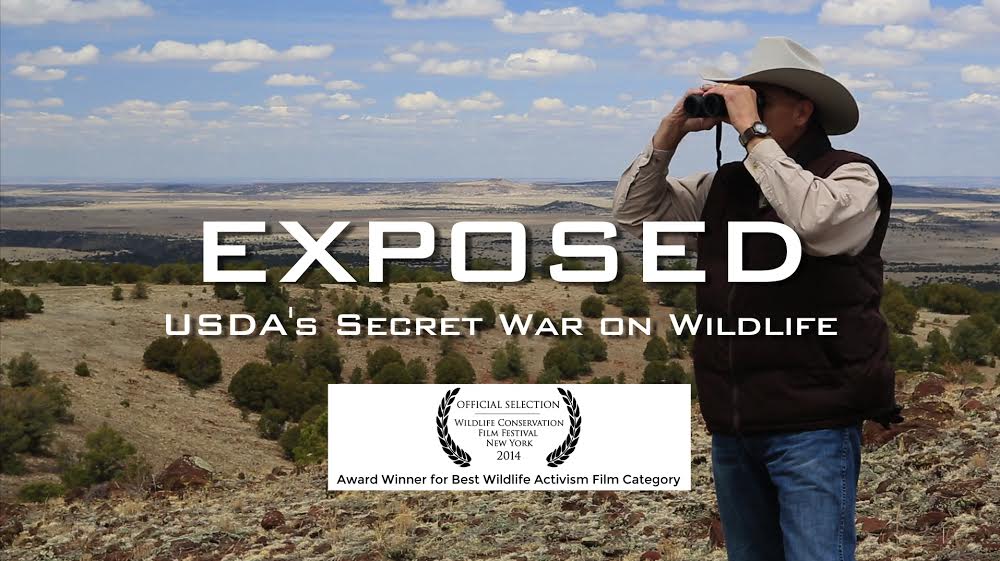
Our award-winning film features former federal agents and a Congressman blowing the whistle on our government’s secret war on wildlife on the taxpayer's dime.
CNN Exposes USDA's Secret War on Wildlife
Watch our director discuss our work to stop this barbaric and wasteful war waged with your tax dollars. It gravely imperils nature's balance, killing millions of wild animals each year, while also injuring humans and pets. Watch video | Learn more
CNN Investigates: Wolves Under Attack

Watch CNN interview with our executive director on the "genocide" of wolves by sport hunters currently underway in ID, MT, WY, MN and WI. Learn more | Help
CBS "Inside Edition" Investigates Deadly Traps Set in Public Areas & Near Homes
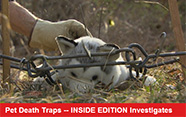
"Animal traps set in public areas" - May 18, 2013 video
"Pet Death Traps" - May 9, 2013 article
Fox News Exposes Wildlife Services' Brutality, Waste and Illegal Activity

PART 1: "Animal torture, abuse called a 'regular practice' within federal wildlife agency" - March 12, 2013
PART 2: "Hundreds of family pets, protected species killed by little-known federal agency" - March 13, 2013
Oregon Couple's Dog Killed in Gov't Trap

Australian Shepherd mix named Fritz killed in trap improperly set 30' from public path. Read Fritz' story
Federal Trapper Targeted & Killed Dog Per TX Dept. of Ag; Congressional Hearings Requested

This pit bull named Bella was killed by a deadly M-44 sodium cyanide device placed only 918 feet from it's owner's house. Texas Dept. of Ag found trapper violated use restrictions for placing M-44. Congressmen have called for oversight hearings on agency responsible. Details
Meet Bella, a Snare Survivor

Bella, a beautiful Husky mix, almost died in an unmarked government snare. She chewed off her own foot in an attempt to escape and ultimately lost her leg. Bella is now doing well. Her story is a testament to love and determination. Details
Watch Coyote Pup Orphans Who Survived & Thrived

Video of five adorable coyote pups who survived the summer without their parents and are now (surprisingly) thriving on their own. Watch video | Why coyotes are essential to nature's balance

We've been championing native predators with science, sanity & heart since 1990. Learn more
Testimonials
We have helped many people who have lost dogs to predator poisons and/or been injured themselves.
Read their testimonials
Sponsors
Meets our hand-picked corporate and foundation sponsors. They are working right along with us to create better world.
Meet our sponsors